Reports: As Marshallese deportations rise, some struggle to adjust
Some people deported to the Marshall Islands had lived nearly their entire lives in northwest Arkansas.
Editor's note: The following is based on news reports from RNZ, the Marshall Islands Journal, Chikin Melele News, the Arkansas Times, and the Island Times.
At least 47 Marshallese people were deported from the United States in the first five months of 2025, according to documents reviewed by Arkansas GRITA. By the end of 2025, Giff Johnson, a Pacific Islands journalist, reported for RNZ that at least 40 people deported were from northwest Arkansas. Of these, at least one was sent to a detention facility in Guantanamo Bay, Cuba before being taken to the Marshall Islands. Just a year prior, 58 Marshallese people were deported from the United States.
Northwest Arkansas is home to the largest population of Marshallese people outside of the Marshall Islands. Marshallese people can live and work in the United States without a visa under the Compact of Free Association (COFA). The COFA is an agreement between the United States and the Republic of the Marshall Islands (RMI) that allows the United States military to maintain a military base and presence on Kwajelein Atoll. Marshallese citizens living in the United States are required to obey laws, maintain legal passports, and maintain I-94 travel records of arrivals and departures. Until recently, Marshallese people had been relatively infrequent targets for deportation.
"Historically these deportations were related to more major crimes, like assault, robbery or driving under the influence," Charles Genuardi, an American who is the adoptive father of a Marshallese child and is involved in Marshallese advocacy, told RNZ. "Due to the historic amount of funding and resources granted to immigration enforcement we are now seeing the deportations of Compact nation individuals for minor infractions such as traffic violations."
Riem Simon, who operates a nonprofit in the RMI capital of Majuro that helps deported Marshallese people with housing, told the Arkansas Times that some recent deportations appear to have been for not maintaining travel records. “Based on current information and legal precedent, immigration offenses such as failing to maintain up-to-date travel documentation have not historically been grounds for deportation," Simon told the Arkansas Times.
“The COFA agreement guarantees fair treatment. Military detention [in Guantanamo] undermines this commitment,” Benson Gideon, a Marshallese advocate, told the Island Times last year.
Under the Trump administration, ICE has deported dozens of Marshallese people, some of whom have spent most of their lives in the United States. Some families of those who are deported have moved back to the islands to reunite with their spouses or parents.
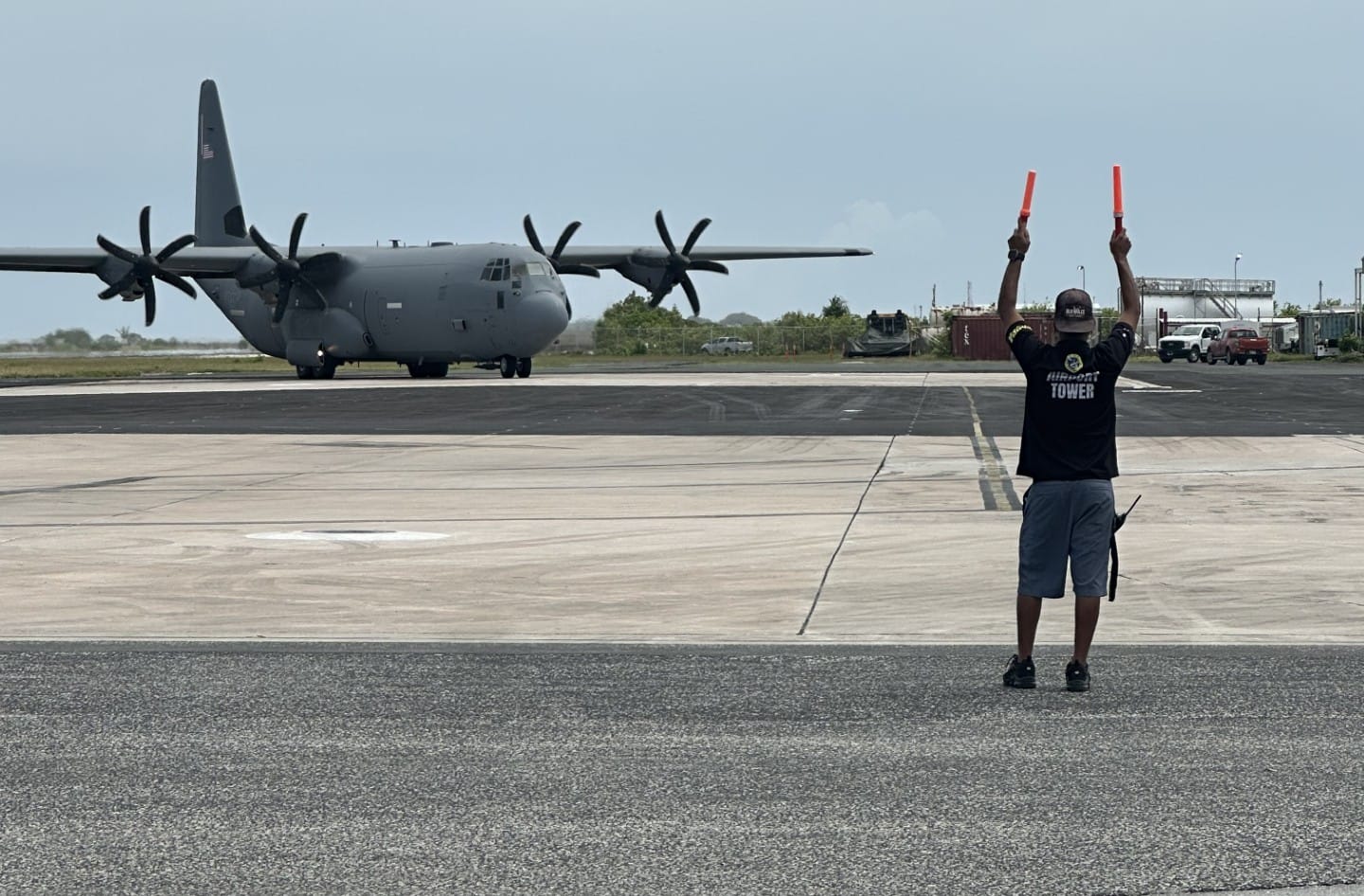
In June 2025, 18 deported Marshallese people landed on the Marshall Islands on a United States military aircraft, escorted by armed ICE agents. They arrived on the islands to communities they don't know, and sometimes find themselves ostracized.
A Marshallese person deported last year told RNZ that although she was born on the island, she wasn't raised there.
"The mindset and mentality and tradition and customs here are different than back home," she said. "I'm still trying to get used to it. It's not easy...Most of the deportees have a lot of experience and are highly qualified for the job here, but just because we're labelled as deportees, it's a struggle."
Another Marshallese person who was recently deported said his entire family is thousands of miles away from him.
"People I grew up with: my siblings, my nieces and nephews, my daughter, my parents, my grandparents, my uncles, my aunties, everybody is over there," a Marshallese man who spent nearly his entire life in the United States before being deported told RNZ.
Arkansas GRITA will continue to follow the impact of increased immigration enforcement on the Marshallese community. Please reach out through our tipline or contact form if you have a story to tell.