
Latina counselor helps NWA immigrant families reckon with pervasive ICE presence
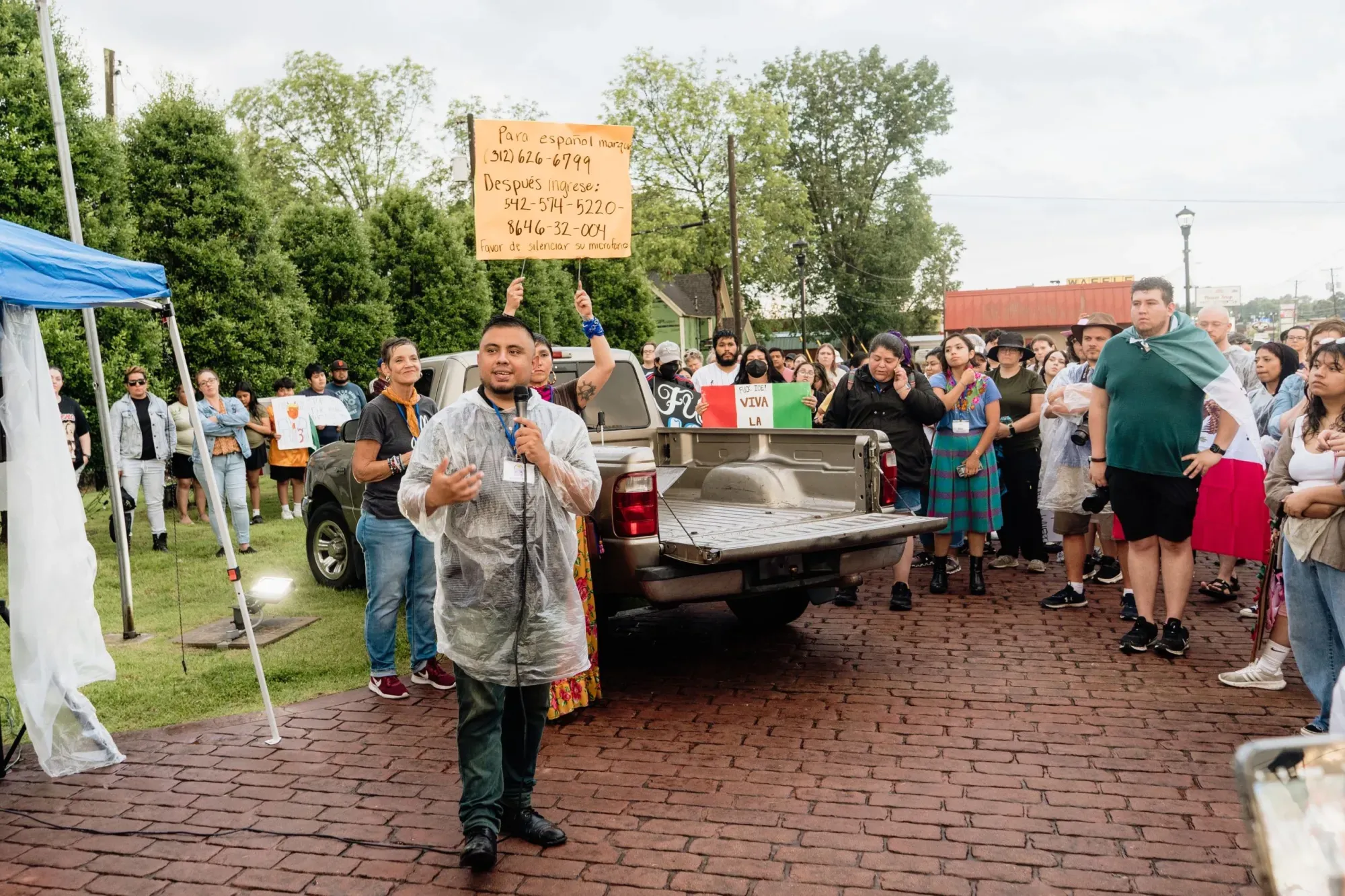
Counselor Monica Vallejo held the first in a series of free workshops recently in Northwest Arkansas specifically for Hispanic families distressed by the growing presence of U.S. Immigration and Customs Enforcement agents.
By Jacqueline Froelich. This story was first published by the Arkansas Times and is republished here with permission.
Counselor Monica Vallejo held the first in a series of free workshops recently in Northwest Arkansas specifically for Hispanic families distressed by the growing presence of U.S. Immigration and Customs Enforcement agents.
More than 132,000 Hispanic people reside in Benton and Washington counties, according to census figures, representing the largest population in the state.
“Over the past year, more of my clients have expressed being afraid,” Vallejo said, “frightened about being racially profiled and detained by ICE.”
News accounts of violence at the hands of immigration enforcement agents in Minnesota, Chicago and elsewhere in the United States aren’t helping anxiety levels. Vallejo said families are essentially being terrorized.
“I want to equip families with tools that they can use to reduce panic and replace fear with preparedness,” she said.

Federal data shows that 1,873 Arkansas immigrants were arrested and detained by ICE agents and local officials over the first seven months of 2025. Among those arrested, 41% were convicted criminals and 43% had pending criminal charges ranging from felonies to misdemeanors. The remaining detainees were cited as having “other violations.” How many detainees were lawfully present was not disclosed.
Vallejo approached AIRE, the Alliance for Immigrant Respect and Education in Springdale, requesting to host a pilot counseling workshop geared toward immigrant families with children and teens.
Vallejo’s workshops are broken into age groups, and youth can freely discuss upsetting conversations about ICE they may hear at home or at school. Participants can also talk about violent ICE-related content they see on the news and social media. She said facilitated therapeutic conversations help children and teens to feel safer and supported.
“And in my workshops, I also teach parents co-regulation,” Vallejo said, “how to better manage their emotions in order to prepare their children without overwhelming them. Parents need to avoid catastrophic language. For example, instead of saying, ‘If ICE agents take me and we get separated, this is what you should do,’ parents should assure their children that they will be safe, no matter what may occur.”
A recent report published by The Marshall Project shows immigrant youth across the U.S. are at increased risk for detainment and deportation. National media scrutiny is also raising alarm about children and teens being locked up for long periods of time in an immigration detention facility for families located in Dilley, Louisiana.
“I feel like as a community we don’t realize the long-lasting effects this situation is having on our mental health and our nervous systems,” Vallejo said, referring to both witnessing ICE enforcement in Arkansas neighborhoods and watching relentless national news coverage of masked paramilitary-style ICE agents violently detaining and disappearing Hispanic Americans.
As a consequence, she said, those who continually fear being stopped and possibly detained may develop hypervigilance that can spur anxiety.
“There’s a lot of uncertainty, which makes this such a complex type of trauma,” she said. “For a long time, many immigrants wrongly believed Northwest Arkansas was a little bubble of safety.”
Nationwide, according to federal immigration data collected and shared by TRAC, of 397,880 individuals arrested and detained over the past year, 396,400 were reportedly removed or self-deported. One-third had no criminal record, an incidence that is rising. A majority lacked access to due process.
Daily online video monitoring by ICE Watch Northwest Arkansas shows federal immigration agents, accompanied by local law enforcement, roving Hispanic neighborhoods, commercial districts, workplaces and public facilities.
“We first observed federal ICE enforcement expanding early last year in Springdale,” said Irvin Camacho, cofounder of AIRE, “where agents engaged in household surveillance and detainment attempts.”
“Traffic enforcement, stopping and questioning Hispanic people while commuting to work or running errands is more common now,” he said, concentrated along Highway 412 through Tontitown.
“After we heard about a Tontitown officer being particularly aggressive, we gathered official video evidence obtained through a Freedom of Information Act request, and met with the police chief,” he said.
“A week later, enforcement activity along 412 went down by a big margin,” Camacho said, although surveillance in Rogers, Springdale and outlying communities with significant Hispanic populations continues.
More than 180,000 authorized and unauthorized immigrants from El Salvador, Guatemala and Mexico have resettled in Arkansas over the past 30 years to escape poverty, political violence and gang conscription. Many have found Northwest Arkansas to be a welcoming place with plentiful jobs, public schools, affordable housing and social services.
That atmosphere abruptly changed in early 2025 after President Donald Trump officially declared an American invasion. He ordered the U.S. Department of Homeland Security to shutter the border and expedite the removal of millions of “criminal illegal aliens” by hiring and training more than 10,000 new ICE agents. A Republican-controlled Congress, in support, approved spending $45 billion to build a constellation of regional detention centers, $14 billion to boost deportations, and $3.5 billion to pay state and local law enforcement to collaborate with ICE.
Aaron Cash, a partner at Herrera Law Group in Rogers, said he, along with other immigration attorneys in Northwest Arkansas, are fielding a rising number of panicked calls from families with loved ones who’ve been taken.
“We are having to screen these cases very heavily,” he said, “declining to represent a lot of them. We don’t want to take their money, simply because the chance of winning is now so low based on the recently changed immigration policies, as well as decisions made by immigration appeals judges. All of these things are working against these defendants.”
“A lot of them in Arkansas are ending up in detention centers for minor traffic infractions,” Cash said. “For example, getting pulled over for speeding or running a stop sign. So oftentimes for a lot of detainees, it’s better to take a voluntary departure from the U.S.,” he said, rather than linger in congested detention facilities.
Cash said local law enforcement and ICE agents are using license plate readers, county tax records and social media to apprehend potential ICE detainees, rather than resorting to racial profiling.
“Officials here seem to have more experience, more training,” he said, “And I just don’t think that we’ve had much aggressive detainment here.” Cash said the scene in Arkansas is more peaceful than what we’ve seen in media coverage showing masked ICE agents violently grabbing and arresting people in places like Minneapolis and Chicago.
Vallejo said Hispanic people in Northwest Arkansas have long been subjected to racial profiling by officers engaged in traditional 287(g) immigration enforcement that combines the forces of local, state and federal agencies. Her task now as a counselor is to validate worsening fears for parents and kids so they may better cope with escalating ICE activity in their neighborhoods.
When asked about recent anti-ICE protests staged by high school students in Rogers, Bentonville, Springdale and Fayetteville, she said it’s encouraging to see.
“Adolescents are fearless, impulsive at times, questioning everything,” she said. “That’s scary to us adults, but that’s what makes the adolescent mind such a beautiful thing. And questioning systems is part of a healthy democracy.”
Vallejo added that an ever-looming ICE presence in Northwest Arkansas isn’t sustainable.
“We can’t keep living in communities where we fear the people meant to protect us.”