
44 Arkansas police departments partnering with ICE, promised funding
The Department of Homeland Security reimburses trained police officers' salaries, bonuses, overtime, and promises up to hundreds of thousands of dollars in funding to departments that sign up for the most extreme version of the immigration enforcement program.
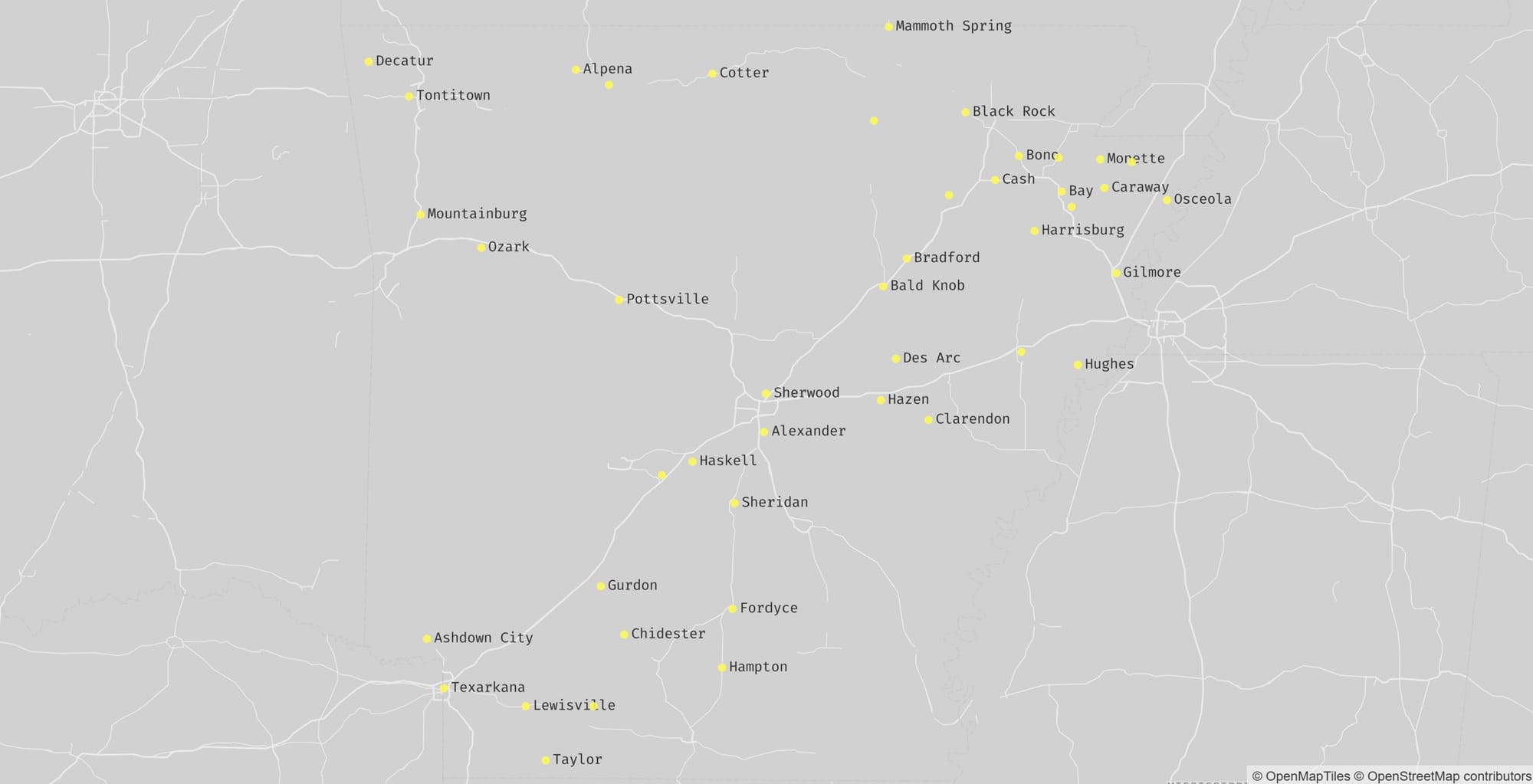
As of mid-July, police departments in 44 municipalities across Arkansas have signed 287(g) agreements with Immigration and Customs Enforcement (ICE) under its Task Force Model. As reported in our 287(g) overview, the model allows trained local law enforcement officers to carry out immigration enforcement during routine policing activities, such as traffic stops or patrols. According to the National Immigration Forum, participating officers may:
- Question individuals about their immigration status if they have reasonable suspicion that the person may be unlawfully present
- Access DHS databases to verify immigration status
- Place immigration detainers on individuals they determine to be removable
- Make arrests for civil immigration violations without requiring a separate criminal charge
- Process immigration paperwork to initiate removal proceedings.
Arkansas Act 654, signed into law last year by Gov. Sarah Huckabee Sanders, requires county sheriffs and jails to participate in the federal 287(g) enforcement program. Local police departments are not subject to that requirement. However, the Trump administration is offering financial incentives to encourage local police departments to participate in the Task Force Model, the most expansive version of a 287(g) agreement.
In September 2025, the Department of Homeland Security (DHS) announced that ICE would reimburse police departments using the 287(g) Task Force Model for participating officers' salaries, benefits, and overtime. DHS also promised quarterly monetary performance awards up to $1,000 per task force officer based on "the successful location of illegal aliens provided by ICE and overall assistance to further ICE’s mission." NPR reported in May that participating municipal police departments also receive $100,000 in funds for new vehicles and may receive tens of thousands more dollars for equipment.
Of the 44 municipalities participating in the program, 40 signed on after DHS announced the new funding model. Participating cities and their signed agreements are listed in the visualization below.
Click here if the visualization fails to load.